
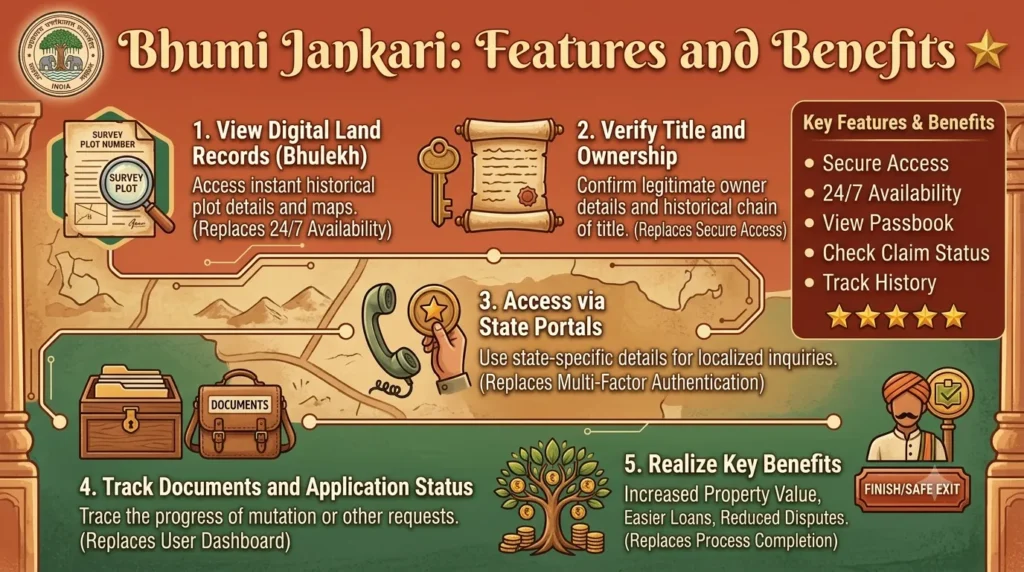
Bhumi Jankari, meaning “Land Information” in Hindi, represents a significant digital transformation in India’s land administration system. Various states have implemented their own versions of Bhumi Jankari portal to provide citizens with easy access to land records, ownership details, and property-related information. These online platforms have revolutionized how people interact with land records, bringing transparency, efficiency, and accessibility to a sector that was previously plagued by bureaucratic delays and corruption.
What is Bhumi Jankari?
Bhumi Jankari is a comprehensive online land record management system that digitizes and makes publicly available all land-related information including ownership records, cadastral maps, mutation details, and revenue information. Different states operate their own versions under various names – Bihar Bhumi, Bhoomi Karnataka, Bhulekh Uttar Pradesh, Dharani Telangana, and others – but they all serve the common purpose of providing transparent access to land records.
Primary Objectives:
- Digitization of land records for easy access
- Elimination of manual record-keeping errors
- Reduction in land disputes through transparent information
- Prevention of fraud and illegal land transactions
- Empowerment of citizens with instant information access
- Streamlining of administrative processes
Core Features of Bhumi Jankari Portals
1. Digital Land Records (RoR – Record of Rights)
The cornerstone feature of Bhumi Jankari is providing access to digitized land ownership records. These records contain comprehensive information about:
Ownership Details: Complete information about the current landowner, including name, father’s name, and address as per official records.
Land Specifications: Plot numbers (Khata, Khasra, or Survey numbers depending on the state), total area, type of land (agricultural, residential, commercial), soil classification, and irrigation status.
Revenue Information: Land revenue dues, payment history, and tax assessment details that help landowners stay compliant with government requirements.
Users can search for records using various parameters like owner name, survey number, or village name, making retrieval flexible and user-friendly.
2. Mutation Status Tracking
Mutation, known as Dakhil Kharij in some states, is the process of updating land ownership records when property changes hands through sale, inheritance, gift, or partition.
Application Submission: Many portals now allow online mutation application submission, reducing the need for physical visits to revenue offices.
Real-Time Status Tracking: Applicants can track their mutation application status online, viewing which stage the application is at and what actions are pending.
Document Verification: The system maintains records of all documents submitted for mutation, creating a transparent audit trail.
Notification System: SMS and email alerts keep applicants informed about application progress, hearing dates, and final approval.
This feature significantly reduces the time and uncertainty involved in property ownership transfer, bringing accountability to the process.
3. Cadastral Maps and Survey Records
Digital cadastral maps are crucial for understanding the exact location, boundaries, and dimensions of land parcels.
Interactive Maps: Modern Bhumi Jankari portals offer interactive maps where users can zoom in/out, view neighboring properties, and understand geographical context.
Boundary Details: Maps clearly show plot boundaries, helping prevent encroachment disputes and boundary conflicts with neighbors.
GPS Integration: Advanced systems integrate GPS coordinates, enabling precise land identification and survey verification.
Historical Records: Some portals maintain historical survey records, allowing users to track changes in land division over time.
4. Revenue Payment Integration
Integrated payment systems allow landowners to pay land revenue, taxes, and other charges online.
Online Payment Gateway: Secure payment options including net banking, credit/debit cards, and UPI for convenient transactions.
Payment History: Complete records of all revenue payments made, with downloadable receipts for future reference.
Automated Reminders: Notifications about upcoming due dates help landowners avoid penalties and stay current with obligations.
Penalty Calculation: Automatic calculation of penalties for delayed payments ensures transparency in fee assessment.
5. Land Conversion and Diversion Information
For landowners seeking to change land use from agricultural to non-agricultural purposes:
Application Tracking: Monitor the status of land conversion applications submitted to authorities.
Regulation Information: Access to rules, regulations, and procedures governing land use changes in different areas.
Approval History: Records of previously approved conversions, providing insights into the process and requirements.
6. Encumbrance Certificate Access
An encumbrance certificate shows all transactions related to a property for a specified period, crucial for property buyers.
Online Application: Submit requests for encumbrance certificates online with specified date ranges.
Digital Delivery: Receive certificates digitally without visiting sub-registrar offices, saving time and effort.
Transaction History: Complete record of sales, mortgages, and other encumbrances that affect property title.
Key Benefits for Citizens
Transparency and Anti-Corruption Measures
Bhumi Jankari portals have dramatically reduced corruption in land administration by:
Eliminating Intermediaries: Direct access to records removes dependency on middlemen who previously exploited information asymmetry.
Public Accountability: Open access means any discrepancies or unauthorized changes become immediately visible to affected parties.
Audit Trails: Digital systems maintain complete logs of all changes, making unauthorized modifications traceable and accountable.
Time and Cost Efficiency
The digital transformation saves citizens significant time and money:
24/7 Accessibility: Access land records anytime, anywhere, without depending on office hours or physical presence.
Reduced Travel Costs: No need for multiple trips to revenue offices, saving transportation costs and time.
Instant Information: What previously took days or weeks now happens in minutes with a few clicks.
Free Basic Services: Viewing land records online is typically free, with minimal charges only for certified copies when needed.
Enhanced Due Diligence for Property Transactions
Prospective property buyers benefit enormously from:
Ownership Verification: Instantly verify if the seller is the actual owner before entering negotiations.
Dispute Detection: Check for pending litigation, disputed ownership, or legal complications before purchasing.
Historical Analysis: Review property transaction history to ensure a clear title chain.
Informed Decisions: Access to comprehensive information reduces the risk of fraudulent transactions and property disputes.
Empowerment of Rural Citizens
Bhumi Jankari particularly benefits rural populations:
Digital Literacy: Common Service Centers (CSCs) and village-level entrepreneurs help less tech-savvy citizens access these portals.
Protection Against Exploitation: Farmers can verify their land holdings, preventing unauthorized transfers by unscrupulous elements.
Loan Facilitation: Easy access to land records enables farmers to obtain agricultural loans faster by providing necessary documentation.
Dispute Resolution: Clear digital records help resolve boundary disputes and ownership conflicts more efficiently.
Benefits for Government Administration
Improved Revenue Collection
Accurate Records: Digital systems maintain precise records of land holdings and revenue dues, minimizing revenue leakage.
Better Compliance: Easy payment options and automated reminders improve tax collection rates.
Analytics and Planning: Data-driven insights help governments plan infrastructure development and resource allocation more effectively.
Efficient Case Management
Reduced Pendency: Digital tracking of mutations and other applications reduces backlog and processing delays.
Performance Monitoring: Administrators can monitor department performance, identify bottlenecks, and improve service delivery.
Resource Optimization: Automation of routine tasks frees up officials for more complex administrative responsibilities.
Data Security and Preservation
Disaster Recovery: Digital records are backed up on servers, preventing loss due to fires, floods, or other disasters that affected physical records.
Long-term Preservation: Electronic records don’t deteriorate over time like paper documents, ensuring historical data remains accessible.
Standardization: Uniform data formats across districts and states facilitate better integration and information sharing.
Additional Advanced Features
Mobile Applications
Many states have developed mobile apps for Bhumi Jankari access:
Offline Functionality: Some apps allow downloading records for offline viewing in areas with poor connectivity.
Language Support: Multiple language options make information accessible to diverse populations.
Push Notifications: Real-time alerts about application status, new features, or important announcements.
Integration with Other Systems
Property Registration: Links with sub-registrar offices for seamless property registration and automatic mutation updates.
Banking Systems: Integration allows banks to verify land records when processing mortgage or agricultural loans.
Court Systems: Connections with judicial databases help in faster resolution of land dispute cases.
Grievance Redressal Mechanisms
Online Complaints: Submit grievances regarding incorrect records, delayed mutations, or service delivery issues directly through portals.
Tracking System: Monitor complaint resolution progress with assigned ticket numbers and status updates.
Escalation Procedures: Automated escalation to higher authorities if complaints aren’t resolved within specified timeframes.
Conclusion
Bhumi Jankari portals represent a landmark achievement in India’s digital governance journey, transforming land administration from an opaque, cumbersome process to a transparent, citizen-centric service. The comprehensive features ranging from digital land records and mutation tracking to cadastral maps and online payments have collectively eliminated many pain points that citizens faced for decades.
The benefits extend beyond individual convenience to broader societal impacts including reduced corruption, faster dispute resolution, better financial inclusion for farmers, and improved government revenue collection. As these systems continue to evolve with technologies like blockchain, artificial intelligence, and advanced GIS mapping, the future of land administration looks increasingly transparent and efficient.
For citizens, understanding and utilizing Bhumi Jankari portals is no longer optional but essential for protecting property rights, conducting due diligence, and participating effectively in land-related transactions. Whether you’re a landowner verifying records, a buyer conducting research, or a farmer seeking loans, these portals provide empowering tools that place crucial information at your fingertips. The digital revolution in land records management is not just about technology adoption; it’s about democratizing access to information and ensuring every citizen can exercise their property rights with confidence and clarity.